Buying Guide
Carry-On Luggage: Spinner or Underseat Bag?
Compare spinner suitcases and underseat travel backpacks, with practical tips for choosing carry-on luggage by size, weight and trip style.
26 July 2026 · 3 min read

Choosing cabin luggage is less about finding the biggest bag and more about matching the format to the journey. A spinner is easy through airports; an underseat backpack keeps your hands free and may suit stricter fares. Here is how to choose without relying on a one-size-fits-all rule.
Style2Have is an Amazon Associate. Some links in this article are affiliate links — if you buy through them we may earn a small commission at no extra cost to you. It never changes the price you pay.
Check the airline before the bag
Cabin-bag allowances vary by airline, route and fare. Check the current maximum dimensions and weight for every leg of your trip before buying or packing. “Cabin”, “carry-on” and “underseat” in a product name are useful clues, but they are not a guarantee that a bag meets your particular booking.
Measure the bag when it is packed. Bulging pockets, wheels and handles can push it beyond the dimensions shown for the main shell.
When an underseat backpack works best
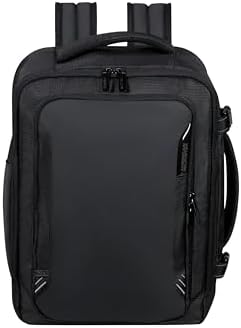
Choose a backpack when you want both hands free, expect stairs or uneven ground, or are travelling on a fare that includes only a smaller personal item. Soft sides are easier to fit into tight spaces, but they also make overpacking tempting.
Underseat travel backpacks



When a spinner works best
A wheeled case is easier on your shoulders and usually holds its shape while you pack. It is a strong choice for airport-heavy trips, neatly folded clothing and journeys where you will not carry the bag far. Remember that wheels and handles count toward the external size.
Cabin-size spinner cases
8 photos
AMERICAN TOURISTER
American Tourister Sea Seeker, Green (Bayou Green), Spinner M (68 cm - 61 L), Suitcases & Trolleys 7 photos
AMERICAN TOURISTER
American Tourister Sunside - Spinner S Hand Luggage, 55 cm, 35 Litre, Pink (Pink Gelato) −41%7 photos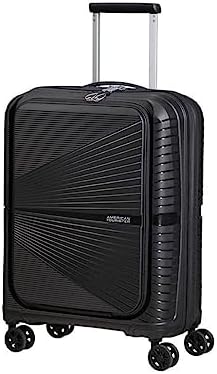
AMERICAN TOURISTER
American Tourister Airconic Front Opening Suitcase, Onyx Black, 55cmCompare the trade-offs
Spinner vs underseat backpack
| Feature | Spinner suitcase | Underseat backpack |
|---|---|---|
| Carrying | Rolls beside you | Leaves both hands free |
| Best terrain | Smooth airport and hotel floors | Stairs, public transport and uneven ground |
| Packing style | Structured and tidy | Flexible and compressible |
| Main caution | Wheels and handles use part of the allowance | Easy to overfill beyond the permitted depth |
| Good fit for | Airport-led trips and heavier contents | Short trips and personal-item fares |
Pack to the limit, not beyond it
Put dense items low in a spinner so it stays stable. In a backpack, keep heavier pieces close to your back and use packing cubes to control bulging. Wear the bulkiest shoes and outer layer in transit rather than sacrificing most of the bag to them.
Leave a little empty space. A bag that only closes when compressed is harder to repack and more likely to exceed the permitted dimensions.
No. Many cabin cases are marketed around 55 cm, but permitted dimensions and weights vary. Check every operating airline and fare before travel.
It is better for stairs, uneven ground and hands-free travel. A spinner is usually easier through airports and better at keeping folded clothes organised.
Usually, the airline measures the complete external bag, including wheels, handles and protruding pockets.
Want to plan the clothes before choosing the bag? Use Build a Look to assemble a compact travel outfit.


